Will AI Replace Structural Trades Jobs?
Structural trades — framing, steelwork, concrete, roofing, scaffolding — build the skeleton of every structure in constantly changing site conditions. AI assists with project planning and safety monitoring, but the physical precision, spatial judgment, and material handling in uncontrolled environments keeps these roles exceptionally automation-resistant.
52 roles found
3D Concrete Printer Operator (Mid-Level)
Operates large-format 3D concrete printing systems (gantry and robotic arm) on construction sites -- managing concrete mix delivery, monitoring print paths, performing quality inspection, and handling post-print finishing. An emerging construction technology role where the operator is essential today but the systems are designed from inception for increasing autonomy. The small, volatile employer base and rapid software automation of print path management compress protection. Adapt within 3-5 years.
Arena Rigger (Mid-Level)
Arena rigging demands physical presence at height in unique venue steel configurations, life-safety accountability over audiences and performers, and strong IATSE union protection — structurally resistant to AI displacement for 10-15+ years.
Asphalt Layer / Asphalter (Mid-Level)
Manual asphalt laying — raking, levelling, and compacting hot-rolled asphalt and SMA alongside the paver on live UK roads — is irreducibly physical, outdoor, and site-variable. Autonomous paving augments the machine operator, not the hand gang. Safe for 5+ years with persistent UK skills shortage and sustained highways investment.
Blacksmith (Mid-Level)
Artisan blacksmithing is deeply protected by physical craft, fire handling, and one-off custom work that no AI or robot can replicate. Niche occupation with stable demand — safe for 10+ years.
Boat Builder (Mid-Level)
Boat building is deeply physical, bespoke craft work in unstructured environments that no AI or robotic system can replicate. CNC automates cutting but not assembly, fitting, or finishing — the core of the role. Safe for 5+ years with stable niche demand.
Boilermaker (Mid-Level)
Field boilermakers fabricate, install, and repair pressure vessels in unstructured construction and industrial environments that no robot can replicate. Strong union protection and high physicality offset BLS decline projections. Safe for 5+ years despite small occupation size.
Brickmason and Blockmason (Mid-Level)
Core work is hands-on masonry in unstructured outdoor environments — protected by Moravec's Paradox for 15-25+ years. Robotic bricklaying (SAM100, Hadrian X) is entering pilots but limited to standardised new-build walls; varied fieldwork, repairs, and custom masonry remain fully human. Slow BLS growth (2%) tempered by persistent construction labour shortages.
Cabinetmaker and Bench Carpenter (Mid-Level)
Custom cabinetmakers retain strong physical and craft-based protection, but CNC automation and AI-powered design tools are transforming 35% of daily work. Safe for 5+ years in custom/bespoke settings; factory production roles face steeper pressure.
Carpenter (Mid-Level)
Carpenters are among the most AI-resistant occupations — core building tasks require physical presence in unstructured environments that no AI or robotic system can replicate. Safe for 5+ years with strong wage growth and persistent labour shortages.
Cement Mason and Concrete Finisher (Mid-Level)
Core work is hands-on concrete finishing in unstructured outdoor environments — protected by Moravec's Paradox for 15-25+ years. Steady demand from infrastructure spending and a severe construction labour shortage.
Cladding Installer (Mid-Level)
Extreme physicality at height on building facades, post-Grenfell regulatory demand, and acute skills shortage make this one of the most AI-resistant construction trades. Safe for 15-25+ years.
Coachbuilder (Mid-Level)
Bespoke physical fabrication across multiple materials in unstructured workshop environments. AI has near-zero exposure to this work. Safe for 10+ years.
Curtain Walling Installer (Mid-Level)
High-rise facade installation at height in unstructured environments, CWCT/CSCS competence requirements, and acute skills shortage make this a strongly AI-resistant construction trade. Safe for 15-25+ years.
Exhibition Stand Builder (Mid-Level)
This role is protected by maximum physical complexity in unstructured venue environments. Every build is different, every site is different, and no robotic system can replicate the adaptability required. Safe for 10+ years.
Fence Erector (Mid-Level)
Fence erectors are physically protected by outdoor, variable-site work across diverse terrain and property types — but AI is transforming estimating, layout, and project management. The core hands-on installation remains firmly human. Safe for 5+ years.
Fire Door Installer (Mid-Level)
This role is protected by unstructured physical environments, mandatory third-party certification, and post-Grenfell regulatory demand that guarantees a durable employment floor. AI cannot hang a fire door.
Flue Liner Installer (Mid-Level)
Hands-on chimney lining work in unstructured domestic environments — every chimney is different. Working at height, lowering liners through irregular masonry, connecting in cramped fireplace openings. No robotic pathway exists. Safe for 5+ years.
General Contractor (Mid-Level)
Licensed GCs are protected by state licensing, personal liability, physical site presence, and client relationships — but AI is transforming estimating, scheduling, and administrative workflows. The role survives; the daily work shifts significantly. Safe for 5+ years.
Ground Rigger (Mid-Level)
Ground rigging demands physical presence in unstructured outdoor environments, real-time safety-critical coordination during lifts, and hands-on truss assembly and load guiding that no robot can replicate on variable event and construction sites. The role is safe for 10-15+ years.
Groundworker (Mid-Level)
Groundworkers perform physically demanding, site-variable work — excavation, drainage, concreting foundations, laying services — in unpredictable ground conditions that no robot can replicate at scale. Strong UK demand driven by housing targets, infrastructure investment, and chronic labour shortage. Safe for 5+ years; the core work remains irreducibly physical.
Guttering and Roofline Installer (Mid-Level)
Hands-on exterior trade working at height on every building's unique roofline. No AI or robotic system can strip old fascias, fit uPVC soffits, or set gutter fall on a Victorian terrace. Safe for 15-25+ years with steady demand from aging housing stock and construction shortages.
Heritage Carpenter / Joiner (Mid-Level)
Heritage carpentry — hand-cutting mortise and tenon joints, scarfing decayed medieval timbers, restoring oak frames in Grade I listed buildings — is irreducibly physical craft anchored in material knowledge no AI possesses. Safe for 15-25+ years with rising wages and a documented skills crisis.
Industrial Abseiler / Rope Access Technician (Mid-Level)
This role is protected by extreme physicality in unstructured, high-altitude environments where no robotic system can operate. Safe for 15-25+ years — drones inspect but cannot paint, weld, bolt, or repair.
Industrial Roofing Operative (Mid-Level)
Industrial roofing remains fundamentally physical work performed at height on large commercial and industrial buildings. Standing seam metal, torch-on felt, and single-ply membrane installation all resist automation entirely. Safe for 5+ years with acute UK skills shortages and rising wages.
Page 1 of 3
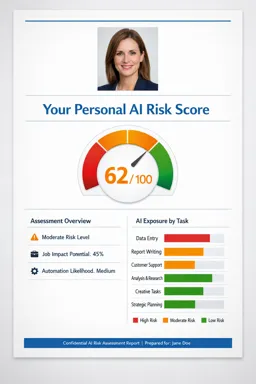
What's your AI risk score?
We're building a free tool that analyses your career against millions of data points and gives you a personal risk score with transition paths. We'll only build it if there's demand.
No spam. We'll only email you if we build it.
The AI-Proof Career Guide
We've found clear patterns in the data about what actually protects careers from disruption. We'll publish it free — but only if people want it.
No spam. We'll only email you if we write it.