Will AI Replace Heavy Equipment Jobs?
Heavy equipment operators command cranes, excavators, paving machines, and pile drivers on construction and civil engineering sites. AI enhances GPS-guided grading and automated positioning, but the situational awareness, safety judgment, and manual control required in dynamic, hazardous environments keeps operators essential.
19 roles found
Composting Site Operative (Mid-Level)
This role is physically protected by unstructured outdoor environments, specialist heavy equipment operation, and variable organic material handling that make autonomous operation infeasible for 15-25+ years.
Crane and Tower Operator (Mid-Level)
Crane operation requires physical presence on active construction sites, real-time spatial judgment under life-safety conditions, and licensed certification that AI cannot hold. The role is safe for 10+ years, with AI augmenting rather than replacing operators.
Crane Operator (Mid-Level)
Crane operation requires physical presence on active construction sites, real-time spatial judgment under life-safety conditions, and NCCCO certification that AI cannot hold. The role is safe for 10+ years, with AI augmenting rather than replacing operators.
Crane Technician (Mid-Level)
Crane technicians work hands-on in unstructured industrial and construction environments — diagnosing faults, rebuilding hydraulic systems, inspecting wire ropes at height, and signing off statutory examinations under personal legal liability. AI-powered IoT sensors and predictive maintenance platforms augment diagnostics but cannot perform the physical repair work. Safe for 10+ years.
Dredge Operator (Mid-Level)
Dredge operators are protected by physical presence in maritime environments, USCG licensing, and the complexity of operating heavy equipment on water. GPS and automated dredge control systems are transforming daily workflows, but the core work — navigating waterways, managing sediment removal, and ensuring safe operations near structures and ecosystems — remains firmly human-led. Safe for 5+ years.
Earth Driller, Except Oil and Gas (Mid-Level)
Earth drillers are protected by physical presence in highly variable subsurface environments and growing demand from geothermal and infrastructure sectors, but GPS-guided drilling, automated rig controls, and real-time telemetry are transforming daily workflows. Safe for 5+ years with acute labour shortages and an aging workforce.
Explosives Workers, Ordnance Handling Experts, and Blasters (Mid-Level)
This role is protected by extreme physical hazard in unstructured environments, strict federal licensing, and severe personal criminal liability for errors. No AI or robot can legally or practically handle live explosives autonomously. Safe for 15+ years.
Highway Maintenance Worker (Mid-Level)
Physical outdoor work maintaining roads, highways, and runways in all weather conditions resists automation — unstructured environments, heavy equipment operation, and active roadway hazards require human presence and judgment. Safe for 5+ years; robotic road repair is experimental and decades from field deployment at scale.
Hoist and Winch Operator (Mid-Level)
Hoist and winch operation requires physical presence and safety-critical judgment, but neutral market evidence, no mandatory professional licensing, and moderate barriers place this role just below the Green threshold. Adapt within 5-7 years by pursuing crane certifications and cross-industry versatility.
Mobile Crane Operator (Mid-Level)
Mobile crane operation demands physical presence on constantly changing construction sites, real-time spatial judgment under life-safety conditions, terrain assessment for every setup, and NCCCO Mobile Crane certification that AI cannot hold. The role is safe for 10+ years, with AI augmenting lift planning and load monitoring but not replacing the operator.
Operating Engineer / Construction Equipment Operator (Mid-Level)
Construction equipment operators are protected by physical presence in unstructured environments and strong union bargaining power, but GPS machine control and semi-autonomous grading are transforming daily workflows. Safe for 5+ years with persistent labour shortages and rising wages.
Paving, Surfacing, and Tamping Equipment Operator (Mid-Level)
Paving equipment operators are protected by physical outdoor work in variable road construction environments — operating pavers, rollers, screeds, and tampers alongside active traffic and crews. Autonomous paving is emerging but augments operators rather than replacing them. Safe for 5+ years with steady infrastructure demand and persistent trade shortages.
Pile Driver Operator (Mid-Level)
Pile driving demands physical presence on active construction sites, real-time judgment about ground conditions and equipment behaviour under life-safety stakes, and union-backed institutional protections that AI cannot penetrate. The role is safe for 10+ years.
Rail-Track Laying and Maintenance Equipment Operator (Mid-Level)
Rail-track equipment operators are protected by physical presence on active rail corridors, strong union representation, and safety-critical operating environments where autonomous systems remain impractical. Safe for 5+ years with stable demand driven by federal infrastructure investment.
Road Marking Operative (Mid-Level)
Physical outdoor work applying road markings on live carriageways resists automation — every junction, curve, and hazard location is different, and specialist thermoplastic/anti-skid application in active traffic requires human presence and judgment. Safe for 5+ years; autonomous line-laying is emerging for straight motorway runs but complex marking work remains irreducibly human.
Rock Splitters, Quarry (Mid-Level)
This role is protected by heavy physical labour in outdoor, unstructured quarry environments where every rock face is different. No AI or robot can read grain lines, position wedges, or split dimension stone autonomously. Safe for 15+ years.
Track Machine Operator (Mid-Level)
Track machine operators are protected by physical presence on live railway corridors during night possessions, operating specialist heavy plant (tampers, ballast regulators, rail grinders, stoneblowers) that requires continuous human judgment in unstructured, safety-critical environments. CPCS/Sentinel certification and strong union representation reinforce protection. Safe for 5+ years with stable demand driven by infrastructure renewal programmes.
Tunnel Boring Machine Operator (Mid-Level)
This role is protected by extreme underground physicality, safety-critical judgment, and growing global infrastructure demand. AI is transforming monitoring and parameter optimisation but cannot operate a TBM through variable geology. Safe for 10+ years.
Waste Transfer Station Operative (Mid-Level)
Role is physically protected by unstructured outdoor plant operation, but smart weighbridges and digital compliance tools are transforming administrative workflows. Core loading shovel work and site management remain deeply human for 15+ years.
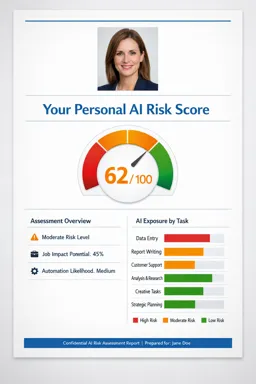
What's your AI risk score?
We're building a free tool that analyses your career against millions of data points and gives you a personal risk score with transition paths. We'll only build it if there's demand.
No spam. We'll only email you if we build it.
The AI-Proof Career Guide
We've found clear patterns in the data about what actually protects careers from disruption. We'll publish it free — but only if people want it.
No spam. We'll only email you if we write it.