Will AI Replace Chemical & Process Operation Jobs?
Chemical plant operators, mixing specialists, and process equipment operators manage complex reactions, separations, and blending processes with safety-critical consequences. AI optimises process parameters and predicts equipment failures, but operators handling hazardous materials and responding to process upsets remain essential.
22 roles found
Aseptic Process Operator (Mid-Level)
Sterile fill-finish manufacturing demands physical cleanroom presence, strict aseptic technique, and FDA-regulated human accountability that AI cannot replace. AI-driven visual inspection and electronic batch records are transforming documentation and QC workflows, but gowning, manual interventions, and contamination-critical physical work remain firmly human. Safe for 5+ years with digital adaptation.
Beverage Filtration Technician (Mid-Level)
Transforming now — 50% of task time exposed to displacement via inline sensors, automated CIP, and SCADA/MES documentation. Physical filter assembly, DE handling, and equipment maintenance buy 5-7 years. Adapt toward automation-literate filtration or move upstream.
Chemical Equipment Operator and Tender (Mid-Level)
DCS/SCADA automation and AI-enhanced process control are compressing this role — fewer operators per shift, each managing more complex multi-unit operations. Physical presence in hazardous chemical environments and safety-critical oversight provide protection, but BLS projects decline and advancing process automation is eroding routine monitoring tasks. Adapt within 3-5 years.
Chemical Plant and System Operators (Mid-Level)
DCS/SCADA automation and Advanced Process Control are compressing operator headcount — fewer operators managing entire plant systems from AI-enhanced control rooms. Physical presence in hazardous environments and safety-critical oversight provide meaningful protection, but BLS projects decline and process automation is eroding monitoring tasks. Adapt within 3-5 years.
Cleaning, Washing, and Metal Pickling Equipment Operator and Tender (Mid-Level)
Automated wash lines, PLC-controlled acid baths, inline sensors, and robotic loading are displacing the core operating and monitoring tasks that define this role. Physical tank maintenance and chemical handling persist, but BLS projects -12% decline (2022-2032) as fewer operators oversee more automated cleaning and surface treatment systems. Act within 2-3 years.
Concentrate Processor — Cannabis (Mid-Level)
Post-extraction refinement is physically hands-on and judgment-heavy, but downstream from the most hazardous extraction work. Adapt within 3-7 years as PLC-controlled distillation and automated crystallisation compress manual process time.
Cooling and Freezing Equipment Operator and Tender (Mid-Level)
IoT sensors and PLC-automated temperature control are displacing routine monitoring while AI-enhanced process optimization reduces the number of operators needed per shift. Physical product handling, equipment maintenance, and food safety interventions in cold environments provide moderate protection. Adapt within 3-5 years.
E-Waste Recycling Technician (Mid-Level)
Core work is physical, hazardous, and varied — every device is different. AI assists with post-shred sorting and documentation but cannot perform manual dismantling of heterogeneous e-waste or hazardous material handling. Safe for 5+ years, with growing demand from circular economy regulation.
Extraction Technician — Cannabis (Mid-Level)
This role's core work — operating high-pressure extraction systems and handling hazardous solvents in variable physical environments — resists automation. Significant documentation and QA tasks are shifting to AI, but hands-on extraction persists. Safe for 5+ years with adaptation.
Extruding and Forming Machine Setter, Operator, and Tender, Synthetic and Glass Fibers (Mid-Level)
Closed-loop extrusion control, AI vision filament inspection, and automated material handling are displacing the monitoring and tending tasks that dominate this role. With only 15,200 employed nationally and BLS projecting outright decline, this niche occupation is compressing faster than the broader machine operator category. Act within 2-4 years.
Head Brewer (Mid-to-Senior)
Head Brewers are protected by the irreducible combination of sensory judgment, physical brewhouse operations, and creative recipe leadership. AI tools are entering back-of-house operations but the core 70% of the role — palate-driven quality control, yeast management, and team leadership — remains human-led. Safe for 5+ years with operational transformation underway.
Hemp Processor (Mid-Level)
This role's physical processing work — decortication, solvent handling, heavy machinery operation — resists automation, but seed sorting, batch documentation, and QC monitoring are shifting to AI-augmented and displaced workflows. Adapt within 3-7 years.
Leather Wet Processing Department Manager (Mid-Level)
This management role is protected by deep domain chemistry expertise, physical presence requirements, and people leadership — but 20% of task time (planning, reporting) is shifting to AI-assisted workflows. Safe for 5+ years; adapt to data-driven process management.
Mixing and Blending Machine Setter, Operator, and Tender (Mid-Level)
Process automation is steadily absorbing the core operating and monitoring tasks of mixing/blending machine operators across chemicals, food, pharmaceuticals, and plastics. PLC-controlled batch cycles, automated dosing, inline sensors, and MES documentation are production-grade. The surviving operator becomes a process technician — managing setup, troubleshooting automated systems, and validating quality rather than manually running batches. Adapt within 3-5 years.
Packaging Ink Technician (Mid-Level)
Automated ink dispensing and spectrophotometer-driven formulation software are performing 50% of core tasks at production scale. Press-side troubleshooting remains human-led but represents only 15% of role time. Act within 2-3 years.
Process Operator — Manufacturing (Mid-Level)
DCS/SCADA automation and AI-enhanced process control are compressing operator headcount across pharmaceutical, food, and chemical manufacturing — fewer operators per shift managing more complex multi-unit operations. Physical presence on hazardous plant floors and regulatory compliance requirements (GMP, HACCP, PSM) provide protection, but routine monitoring tasks are eroding. Adapt within 3-5 years.
Rubber Compounder (Mid-Level)
Automated batch weighing, recipe-driven Banbury mixing sequences, inline rheometry, and AI-optimised cure system selection are absorbing the formulation, mixing, and testing tasks that define this role. Physical compound handling, specialist elastomer knowledge, and the chemistry judgment needed to adjust formulations for non-standard feedstock or performance targets persist -- but the compounder who only follows recipes and pulls test samples is being replaced by smart mixing systems. Adapt within 3-5 years.
Rubber Technologist (Mid-Level)
AI material informatics and automated testing are absorbing formulation optimisation and routine laboratory work, but the polymer science judgment needed to design novel elastomer systems, troubleshoot production failures, and navigate application-specific regulatory requirements persists. Adapt within 3-7 years.
Separating, Filtering, Clarifying, Precipitating, and Still Machine Setter, Operator, and Tender (Mid-Level)
DCS/SCADA automation, AI-enhanced process control, and inline analytical sensors are compressing the operator workforce — fewer per shift, each managing more complex multi-unit separation and filtration operations. Physical presence in semi-hazardous process environments provides near-term protection, but BLS projects -4% decline and advancing process automation is steadily displacing routine monitoring. Adapt within 3-5 years.
Sugar Refinery Operative (Mid-Level)
DCS/SCADA automation and AI process optimisation are compressing monitoring and documentation tasks. Physical presence for CIP cleaning, troubleshooting, and hands-on equipment work provides moderate protection, but the operational core is shifting toward fewer operators managing more automated systems. Adapt within 3-5 years.
Tanning Technician (Mid-Level)
Core tanning processes are hands-on chemical/physical work that AI augments but does not replace — yet declining domestic employment and offshore migration compress the score. Adapt within 3-5 years.
Wine Maker / Oenologist (Mid-to-Senior)
Winemaking's core craft — grape selection, fermentation judgment, blending by palate, and ageing decisions — resists AI displacement. AI tools augment monitoring and analytics but the winemaker's sensory expertise and physical cellar work remain irreducible. Safe for 5+ years.
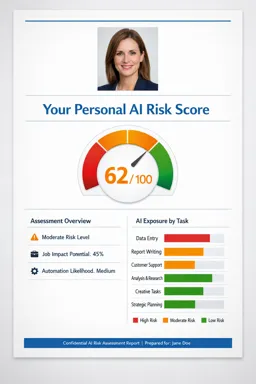
What's your AI risk score?
We're building a free tool that analyses your career against millions of data points and gives you a personal risk score with transition paths. We'll only build it if there's demand.
No spam. We'll only email you if we build it.
The AI-Proof Career Guide
We've found clear patterns in the data about what actually protects careers from disruption. We'll publish it free — but only if people want it.
No spam. We'll only email you if we write it.